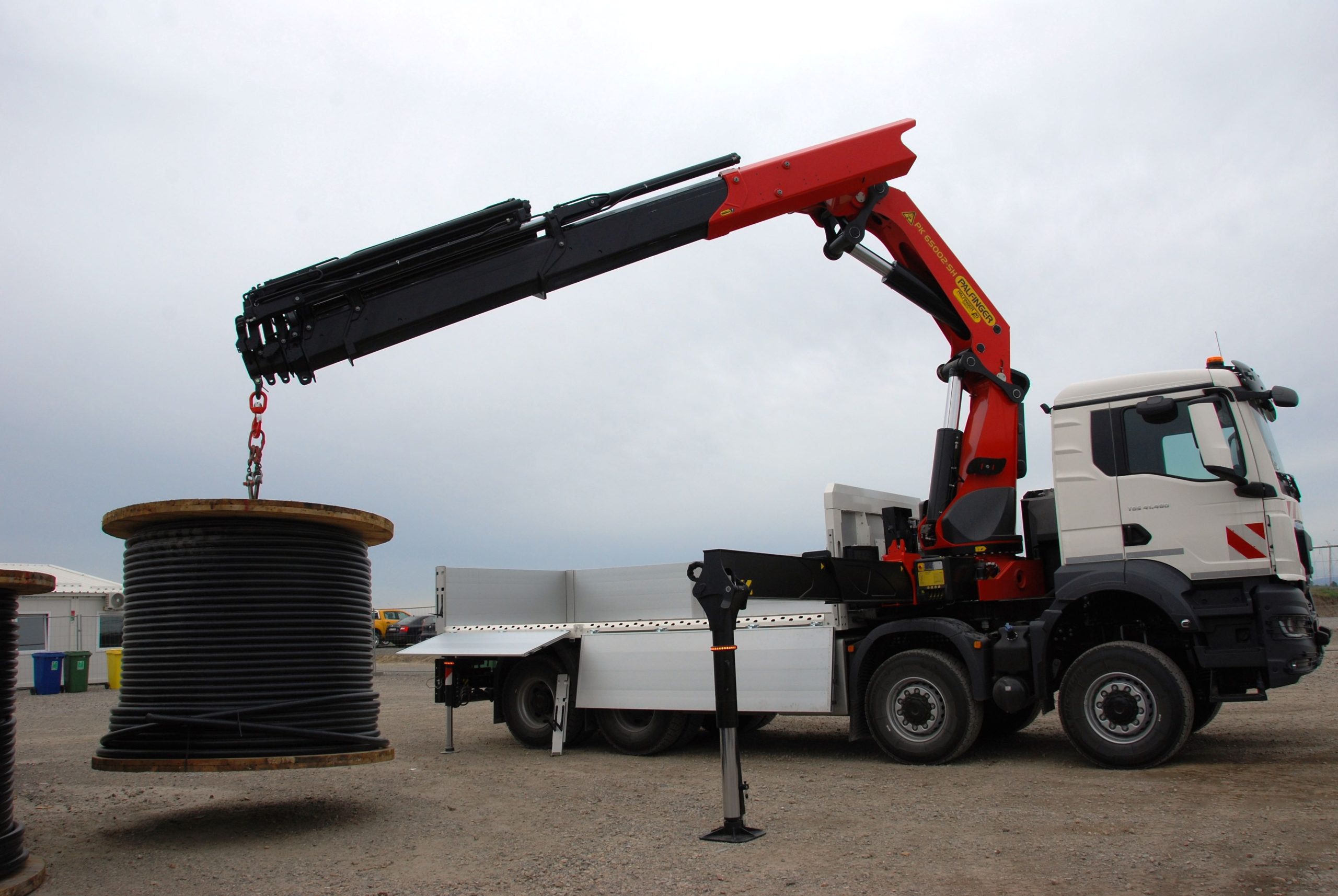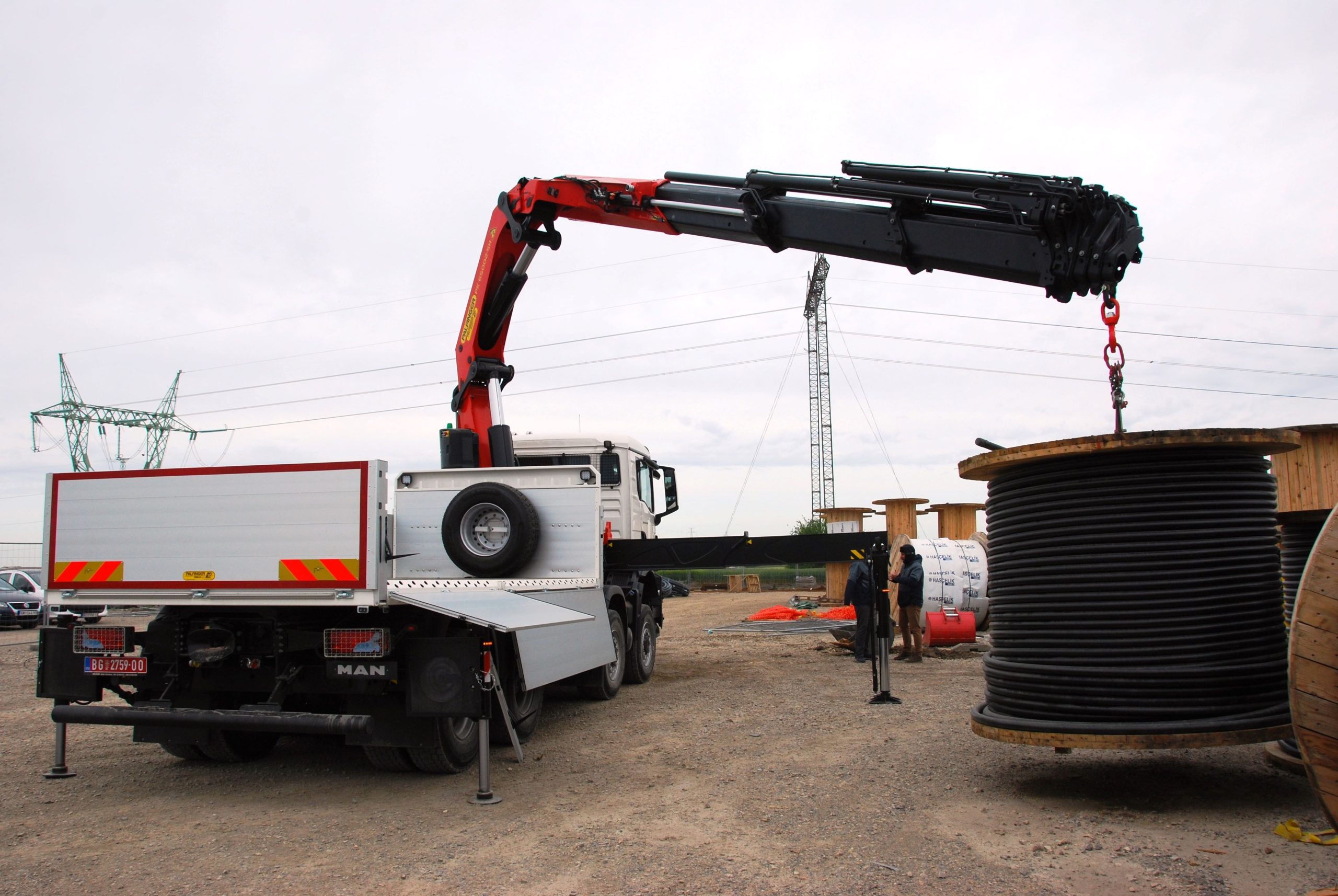

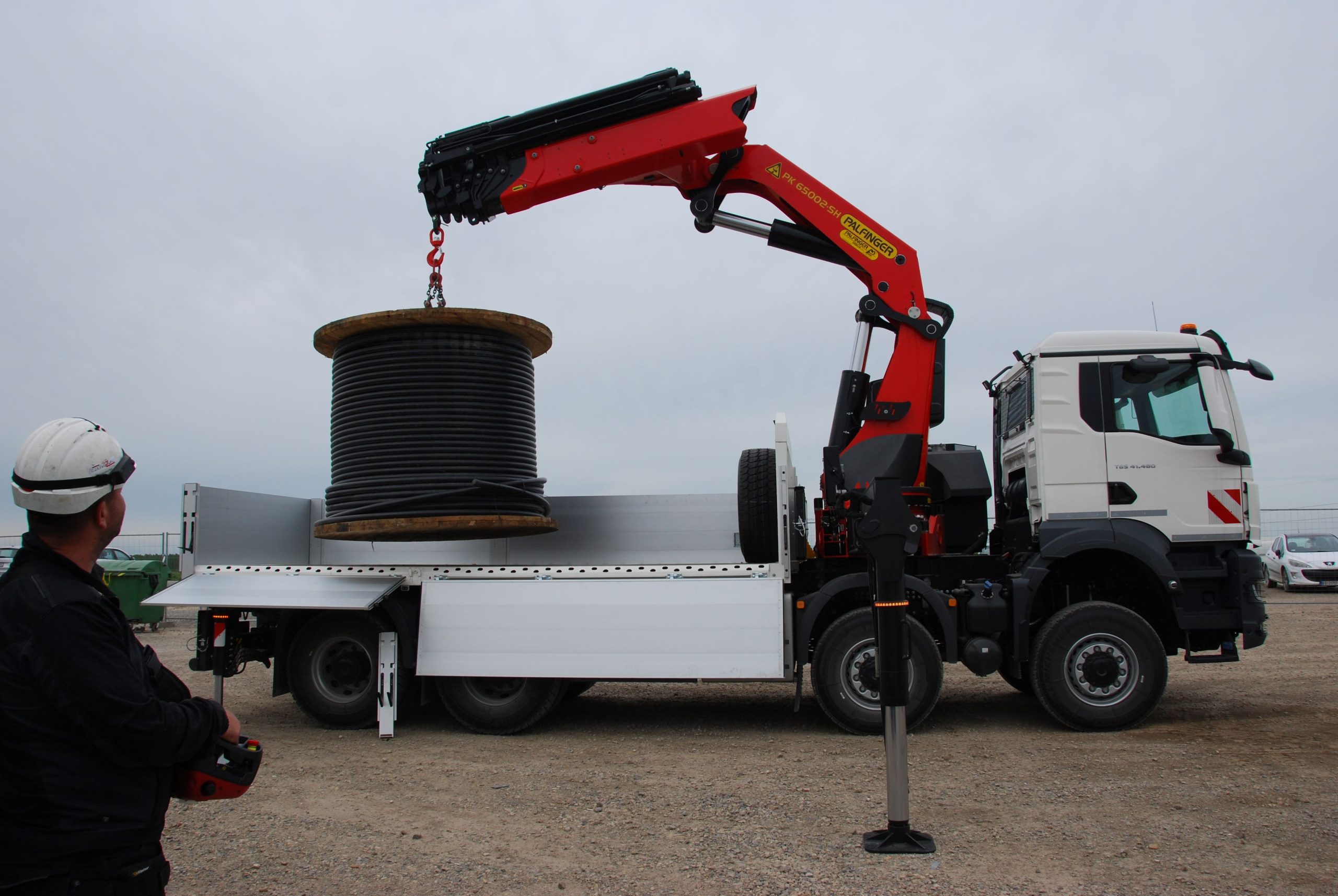
Following operator training and the first test load lift, the Belgrade-based company High Voltage Energy began regular operation of the Palfinger PK 65002 SH crane at the end of May. The crane, along with a cargo bed, was installed by experts from Palfinger Serbia in Pančevo. The Palfinger PK 65002 SH is a universal crane with eight hydraulic extensions, providing a reach of 20.3 m. Depending on the number of extensions in use, this crane can lift loads weighing up to 12,500 kg.
The new customer deployed their first Palfinger crane for lifting various loads at the construction site of Serbia’s largest wind farm – Čibuk 2, located in the village of Bavanište near Kovin. Based on initial experiences, they are satisfied with its performance.
The Palfinger PK 65002 SH, one of the few cranes in Serbia with such structural characteristics, features a continuous slewing angle, similar to all newer Palfinger crane models. The renowned Austrian crane manufacturer, among the largest in its industry worldwide, emphasizes the comfortable and simple operation of this model. The operator’s work is facilitated and accelerated by several state-of-the-art systems, including HPSC, HPSC Load, P-FOLD, and AOS.
The HPSC option (High Performance Stability Control) enables crane operation in spaces where it is impossible to fully extend the stabilizers. Even in such situations, the crane can lift or lower loads, albeit with a reduced capacity corresponding to the vehicle’s current stability.
The crane is also equipped with the HPSC LOAD system, which utilizes the load on the truck as a counterweight to stabilize the vehicle, thereby increasing the operational reach. The convenient P-FOLD option assists the operator in folding and unfolding the crane with a single command, while the AOS option neutralizes load oscillations during sudden changes in crane commands. When the AOS option is active, the crane gradually changes direction during sudden command changes to reduce the risk of abrupt shifts and load swaying.
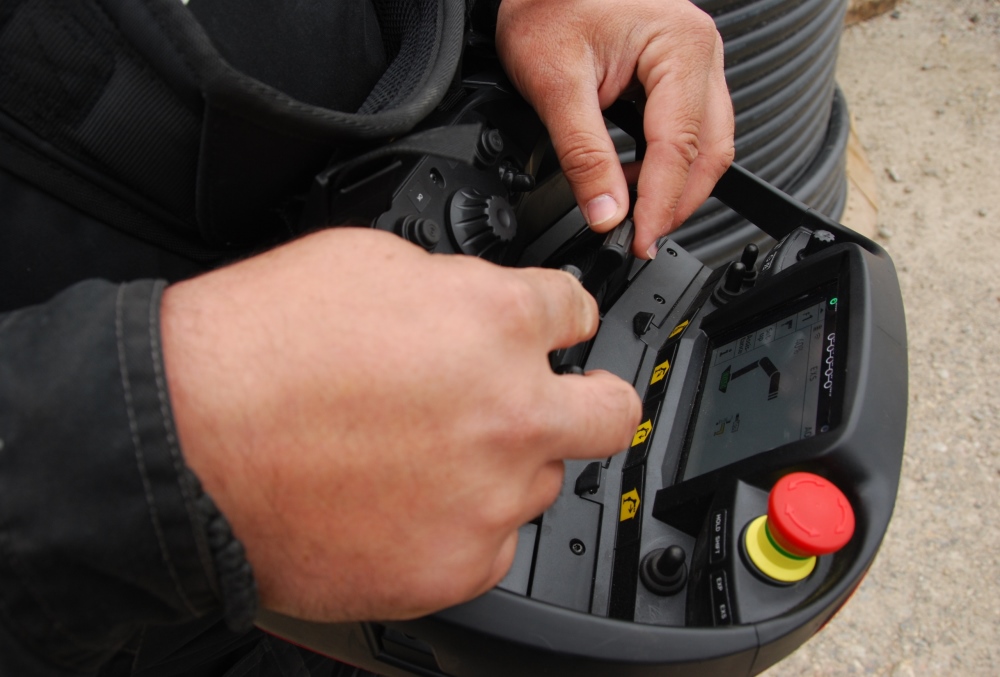
Crane operation is not only comfortable but also safe for the operator, as all functions are activated via the PALcom P7, Palfinger’s radio remote control. It is ergonomically designed and adapted for long-term operation. The battery lasts up to 12 hours, and a fast charger is used for recharging. A 4.1-inch color TFT screen occupies the central position on the remote control. The screen is adapted for work in all weather conditions, as all extension movements remain visible even in direct sunlight.
The Palfinger PK 65002 SH crane is mounted on a four-axle MAN TGS 41.480 8×6 BB CH chassis, the latest TG3 generation, designed for a total weight of 44 tons. This truck is powered by an engine with 353 kW (480 hp) and a maximum torque of 2,450 Nm. The non-standard superstructure required each of the two front axles to be reinforced for a load capacity of nine tons. The vehicle is equipped with additional off-road software, which, along with the occasional engagement of three drive axles, allows the Palfinger PK 65002 SH crane to be used in highly challenging terrain, such as slippery (muddy or snow-covered) surfaces.
A fixed cargo bed with a length of 5,400 mm and aluminum sideboards (the sides consist of two parts) was also mounted on the same chassis at Palfinger Serbia.
In the coming months, there will be plenty of work for the Palfinger PK 65002 SH crane at the Čibuk 2 wind farm construction site, which has a capacity of approximately 155 megawatts. The Čibuk 2 wind farm, located between the villages of Bavanište and Mramorak, about 40 km from Belgrade, is expected to produce 400,000 megawatt-hours of electricity annually with 22 wind turbines, providing enough green energy to power more than 62,000 homes. On an annual basis, it will eliminate the emission of 311,200 tons of carbon dioxide into the atmosphere, which would have been emitted if the same amount of electricity were produced by coal-fired power plants. It will also reduce annual emissions from existing thermal power plants by 12,700 tons of sulfur dioxide, 1,470 tons of nitrogen oxides, and 512 tons of fine dust.